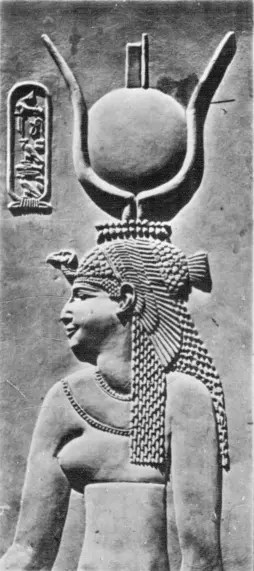
In the last post, we started looking at some connections between Kleopatra and Isis, as well as the history of the Ptolemaic queens identifying with a core selection of Goddesses, first and foremost among Them, our Lady Isis. And we saw how, when Kleopatra returned from Rome to Alexandria, she often portrayed herself as Isis in public, including important religious festivals.
As there were many such festivals in Egypt, there were many opportunities for Kleopatra’s people to see her as Isis the Queen. Indeed, upon her return from Rome, she threw herself into ruling Egypt, strengthening Alexandria’s intellectual supremacy—from the arts to engineering—building temples, encouraging medical research, and making sure her people were fed, in good times or bad. And always, as Egypt’s ruler, she had duties of making offerings to the Deities. We can be certain that Isis was paramount among those to Whom the queen made offering.
Kleopatra gained such a reputation for wisdom and fairness that people appealed to her for justice constantly. Schiff writes, “The wise queen granted a general amnesty before she moved about the country for audits or religious festivals; to fail to do so was to be greeted by a thousand plaintiffs.” Kleopatra’s reign is also notable for the absence of revolts in Upper Egypt, a state of affairs that had not been true for a century and a half.
Kleopatra continued work on the Hathor temple of Dendera (where there is also a smaller temple of Isis). She finished the work her father had begun at the Horus temple of Edfu. She built an oracular boat shrine at Koptos. Read about that here. She had a shrine honoring Divine Children built at Hermonthis, near Luxor. She continued work on a huge monument to Caesar, the Caesarion, in Alexandria. She continued the work at Isis’ Philae temple, which had also been started by Ptolemy II. But her largest project, according to Schiff, was a temple Isis in Alexandria, of which, unfortunately, nothing remains.
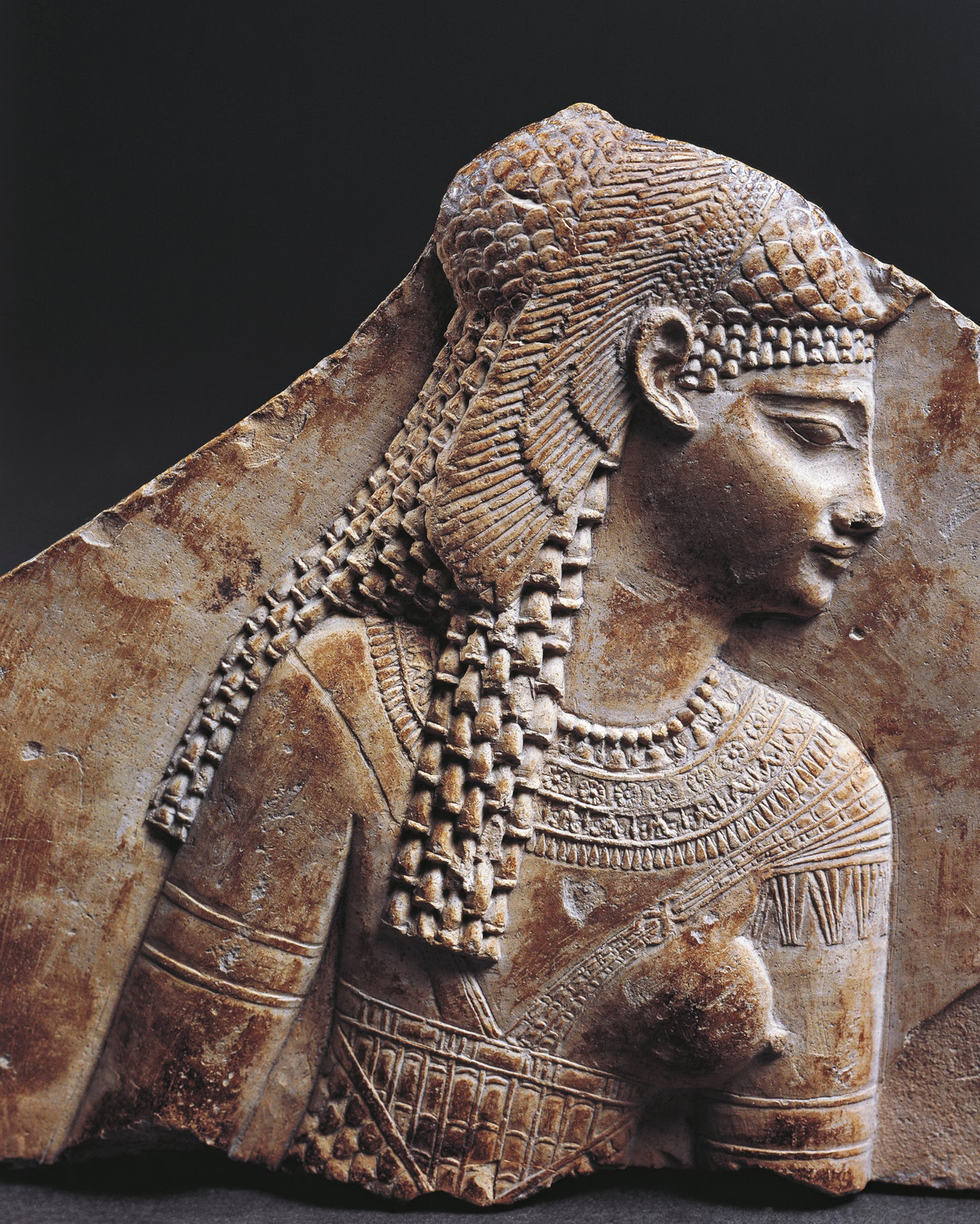
(Schiff did not say which Isis temple she was referring to. Possibly, it is the one associated with the Pharos Lighthouse that was found by Goddio and his team. Or maybe it was the temple of Isis connected with the famous Alexandrian Sarapion, the temple of Isis’ Hellenistic consort, Sarapis. The Sarapion had a temple to Sarapis and to Isis, side by side, along with a smaller Haropokrates temple attached to the Sarapion. I would assume it is not Kleopatra’s personal temple on Antirhodos, which was a smaller, private temple, near the royal quarters, where the queen could worship Isis in private. It, too, is at the bottom of the bay.)
Kleopatra granted the right of sanctuary to an Isis temple in Ptolemais in Upper Egypt and, near the end of her reign, to a Jewish synagogue, possibly in or near Leontopolis in Lower Egypt. This right enabled people to seek asylum within the walls of the temple and the synagogue. They could not be harmed or seized while on the sacred properties. If a person chose to live within the temple, this sanctuary might protect them forever; or it might allow for a pause in hostilities so that disagreements between people or groups could be fairly adjudicated.
By the time Marc Antony entered the picture, Kleopatra as Isis was well established, though she wisely chose to greet him at Tarsus (in Türkiye today) as Aphrodite. If you don’t know the story, Antony had summoned the queen to answer questions about her loyalty to Rome and to get funds for an upcoming war. Kleopatra’s famously lavish and gobstopping arrival—all gold, perfume, and purple sails—made questions of loyalty moot as Antony found himself engulfed in the queen’s extravaganza, which quickly made Kleopatra the gracious and generous host rather than the summoned subject.
So, Kleopatra won Antony over.
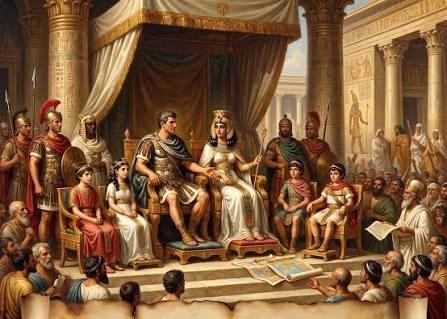
Time passed, and the ever-fertile queen birthed three children with Antony: Alexander Helios, Kleopatra Selene, and Ptolemy Philadelphos. We next meet the family during what is known as the Donations of Alexandria. This was a huge celebration, including processions, ceremony, and feasting for the people of Alexandra, which celebrated Antony’s martial victories. During the ceremony, Antony awarded lands he had conquered, as well as some he had not yet conquered, to Kleopatra and her children. And so, it seemed that the Egyptian Empire was once again expanding under Kleopatra.
The Donations ceremony took place in the Alexandrian gymnasium, sort of a city center where public buildings were located, and which could hold a very large number of citizens. Upon a silver platform rested two golden thrones, one for Kleopatra and one for Antony. Smaller, lower thrones were provided for the children. Reportedly, Antony was dressed as Dionysos, with ivy crown and thyrsos in hand, and seated upon one of the golden thrones. He addressed Kleopatra as the New Isis and invited her to join him on the other throne. She was attired in full Isis regalia, and with the royal crown of Egypt upon her head. The children were costumed as well, according to the dress of the nations over which they now ruled. Thousands cheered as they saw their queen as Isis with Her Horus, and as the Great Mother of Abundance with her many children about her.
Was Kleopatra a genuine devotee of Isis? And did she think she was Isis?
Even with all the evidence left to us from Kleopatra’s life and death, we cannot know what was truly in her heart when it came to her devotion to Isis. She left us no diaries or personal hymns to the Goddess. Yet, there is absolutely no reason not to think that Kleopatra’s worship of Isis was genuine. When she needed to appear as a Divine ruler to her people, Isis was the Goddess she chose. The fact that she had a personal temple near her royal quarters would also seem to indicate that she was sincere in her worship of Isis. She wanted Her temple nearby.
Kleopatra certainly tried to emulate the Goddess in ruling Egypt wisely, from building and maintaining the temples to feeding her people, even in terrible years when the harvest failed. The fact that we have no records of internal revolts during her rule further points to the success of her reign, at least domestically. Later traditions connected Kleopatra’s name to magic and alchemy, reasonable pursuits for an educated, intellectual, and curious queen, and also connected with the Goddess Isis.
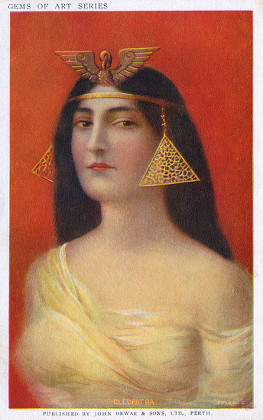
Kleopatra most certainly identified with the Isis and Osiris myth, especially after Caesar’s death. I also would not doubt that on those festival and public occasions where she dressed as Isis, that she probably intended to—and may have actually accomplished—carrying the energy of Isis. Remember that there was an eternal Egyptian tradition of royalty being, in some measure, divine. The pharaoh IS Horus, or Horet, in this case.
What’s more, I am certain that Egyptians practiced what is today known as the Assumption of the God/dessform, Drawing Down, or Aspecting. They may have called it by the Egyptian name Kheperu, “transformations.” Kheperu is when the priestess—and the pharaoh was always the highest high priest of ancient Egypt—ritually takes on the form and energy of the Deity. With that spiritual tradition firmly in place in Egypt, it seems very likely to me that Kleopatra would have actually tried to embody Isis’ energy. She was a Ptolemy. Her family had ruled Egypt for hundreds of years, and Egyptian rulers were always connected with the Deities. She was very well educated. She knew the traditions, including the traditions of the clergy.
And when she died by her own hand, rather than suffer the torture and humiliation of Octavian’s Roman triumphal procession, legend has it that she chose to die by the bite of an “asp.” Aspis is what the Greeks called the Egyptian cobra, the uraeus serpent. Thus, it would have been a royal death, a fiery bite from the fiery Eye of Re—which is also one of the many, many forms of Kleopatra’s Goddess, Isis.


Hail Isis! Hail Cleopatra Thea Philopator Nea Isis-Aphrodite!