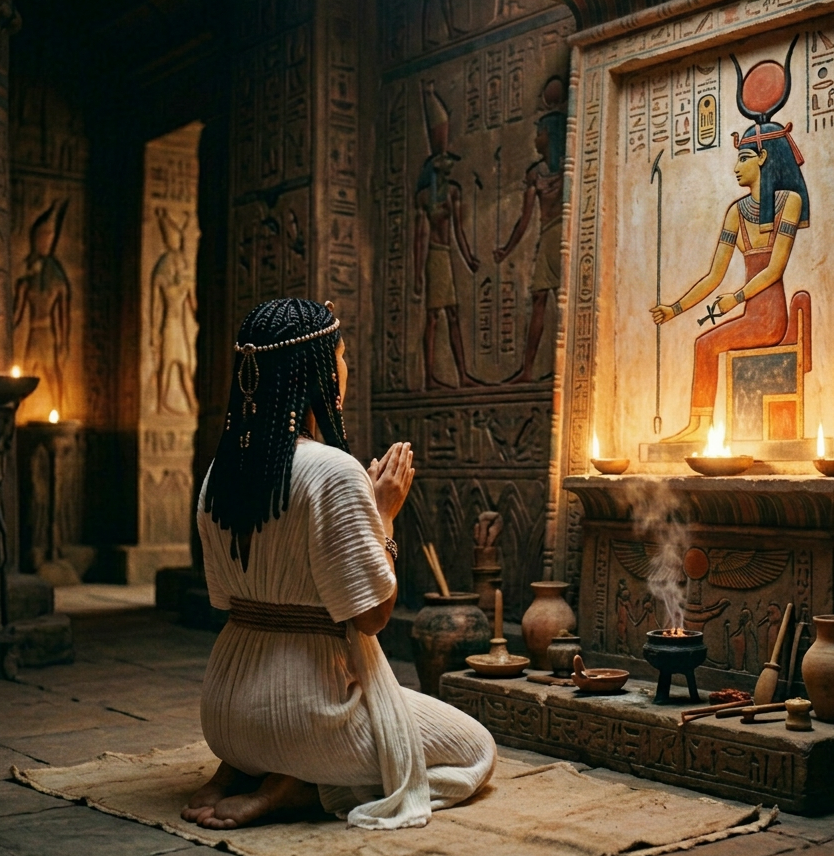
Last time, we looked at dream divination, as well as a few intriguing options for lot-casting types of divination from ancient Egypt. This time, we’ll examine Egypt’s “barque oracles.”
These provided for direct interaction with the oracular Deity. The subject of such an interaction might be about personal matters, but in some cases, the oracle had the binding power of law; lawsuits could be decided by oracle. In other words, oracles were not taken lightly in ancient Egypt. Regular people used them. Temple personnel of all ranks used them. Pharaohs used them.
In Egyptian, such direct oracles were called peh-nutjer (pḥ-nṯr), which literally means “to reach God,” with nuances of “to approach” and “to petition” the Deity. When you find them in the Greek and Demotic magical papyri, they are usually translated as “a God’s arrival.” If we wanted to be Isis-specific, we could call our oracular audience with Her a peh Iset.
Rome was highly (highly!) discomfited by such oracles. So much so that, when Egypt came under Roman rule, we find a decree like this from the Roman administrator of Egypt in 199 CE:
[Since I have come across many people] who consider themselves to be beguiled by the means of divination [I quickly considered it necessary,] in order that no danger should ensue upon their foolishness, clearly herein to enjoin all people to abstain from this hazardous superstition. Therefore, let no man through oracles, that is, by means of written documents supposedly granted in the presence of a deity, not by means of the procession of cult images or suchlike charlatanry, pretend to have knowledge of the supernatural, or profess to know the obscurity of future events. Nor let any man put himself at the disposal of those who inquire about this nor answer in any way whatsoever. If any person is detected adhering to this profession, let him be sure that he will be handed over for capital punishment…
—Q. Aemilius Saturninus, prefect of Egypt
By what was forbidden, we can see exactly what people were doing: communicating with Deities, receiving oracles, and helping people receive oracles.
And they had been doing so for a very, very long time.
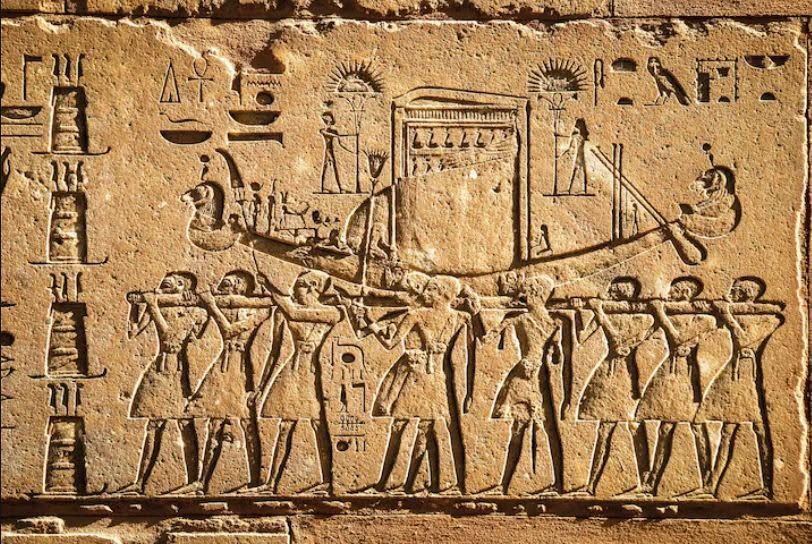
A primary way that Egyptian people consulted Deities was when the sacred image was taken out of the temple during processions. The Deity was carried in Their sacred barque, a reduced-sized boat with the Deity’s shrine and the statue of the Deity inside. While most of the records we have of barque oracles are from the New Kingdom onward, there is a rock inscription about one from the late fifth dynasty. We also have a few records of oracles from the tenth through thirteenth dynasties. So we can be sure they had been ongoing for at least from the fifth dynasty, and very likely before that.
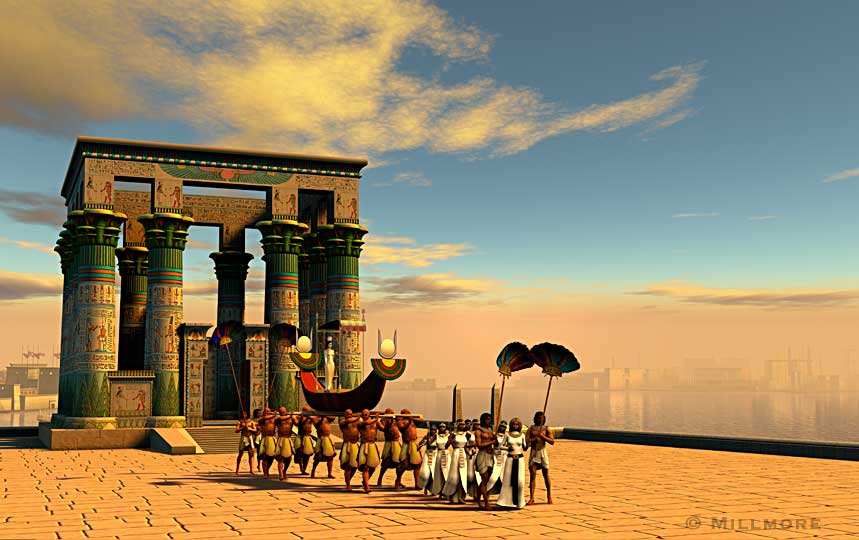
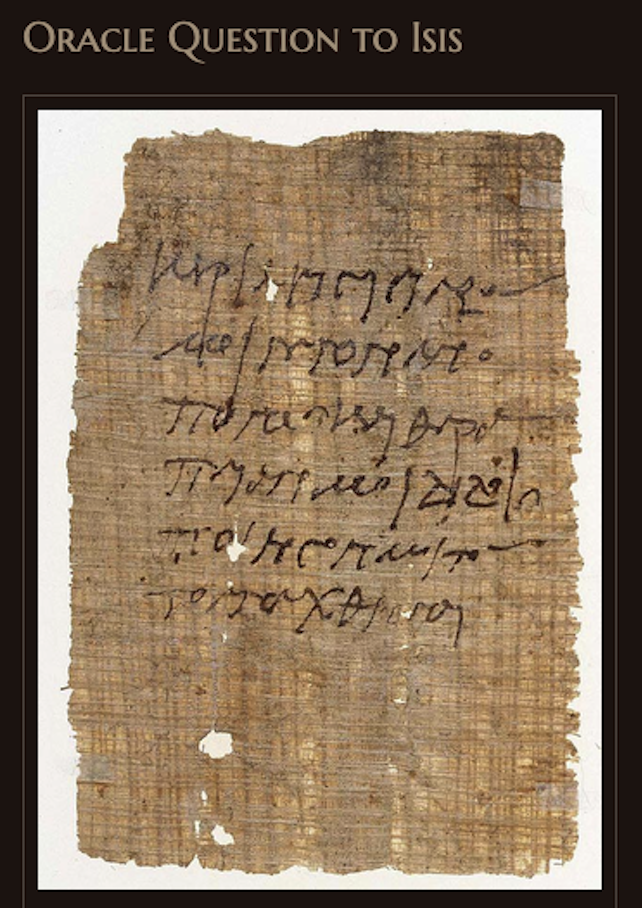
People would approach the Deity’s barque and request an oracle. If the request was granted, the querent would either write (or have a scribe write) or speak their question. The question had to be simple, generally yes or no. If the Deity’s barque moved forward, it was “yes.” If it moved backward, then “no.” The querent might also submit two outcomes, positive and negative. We have an example of such an oracle from the second or third century CE, so we can see how this particular type of oracle worked.
In this case, it is an oracular question to Isis, written in Greek. It says, “Lady Isis, if you have caused my misery, and if you can give me a cure, please make sure that this note is brought back to me.” The querent had submitted two outcomes for their question: positive and negative. Instead of the forward-or-back motion of the barque to indicate the answer, the barque moved toward the correct answer and that papyrus was returned to the querent. In this case, the querent was hoping that they had correctly deduced that Isis was behind the troubles, and that She would also provide the cure.
People asked many different types of questions, from settling property rights to identifying a spirit that might be troubling someone to solving acts of theft. (We also know that people “convicted” by an oracle could consult two other oracles for judgment before suffering any consequences.) While we might think a system like this could be subject to abuse, there were safeguards. Priestly training forbade “jostling” of the barque to influence an outcome, senior personnel were always present, as were watchful community members. With everything being out in public, there was a good deal of transparency in the proceedings.
Many Deities gave such oracles, with Amun foremost among Them. But from the New Kingdom onward, Isis, too, was very well established as an oracular Goddess.
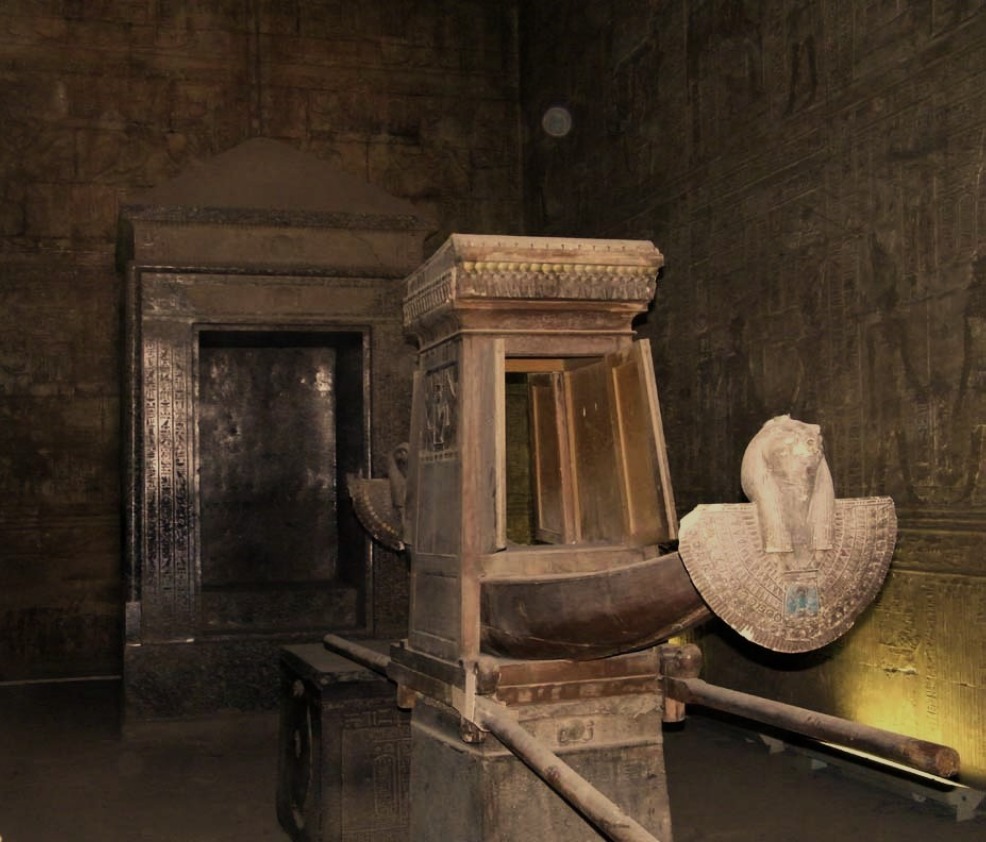
At Abydos, we have records of people asking Isis for consultations related to cures and healing. I mentioned the dream oracles from Saqqara last week. One of the papyri from Oxyrhynchus, which lists the many names by which Isis is called in different places in Egypt and throughout the Mediterranean, tells us the She is called “Oracular” in Xois. (Xois was an extremely ancient city on an island formed between two branches of the Nile in the Egyptian delta. It was in the Sebennytic nome, the same one as Isis’ important temple at Isiopolis, now Behbeit el Hagar.) At another important Isian oracular site, Koptos in Upper Egypt, we learn that a particular official had been selected for promotion by the barque oracle of Isis. There was also a barque oracle of Isis at Her temple at Philae. We’ll come back to both of those in a moment.
One did not always have to rely on the movement of the divine barque to provide an answer. Especially if one was a pharaoh. Hatshepsut recorded that she had “heard” the voice of Amun advising her on the best route for her expedition to Punt, and that she’d heard it while standing at His “Great Seat.” The Great Seat is the pedestal upon which the barque shrine of Amun rested at Karnak. Whether the pharaoh had heard the answer through a speaking oracle or had heard it in her own meditations, we do not know. Yet, I am quite sure devotees of the Deities “heard” their chosen Divine Ones speak to them, just as so many of us do today in our personal shrines.
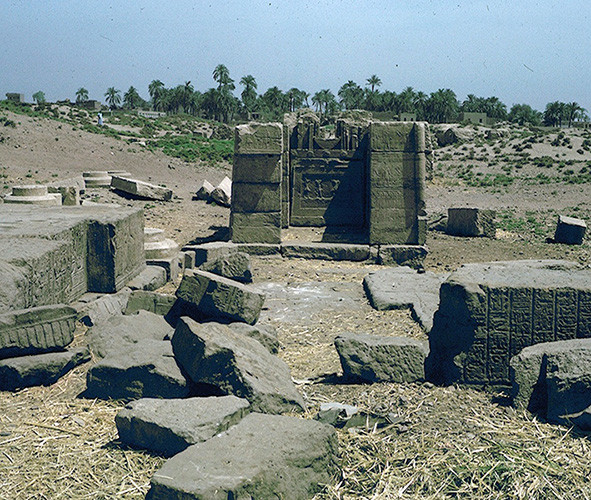
This may have been the case with Isis of Koptos. The main temple there is a double temple to Isis and Min. The site also has a smaller Osirian temple, as well as a temple of Geb and Isis, within which is a small oracular chapel built under Kleopatra VII, yes, the famous one.
There is almost nothing left of the Geb and Isis temple, but there’s a bit left of the small oracular chapel. The chapel featured a carved image of the divine barque resting on its Great Seat, and thus readily available for oracles. Nothing I’ve read so far tells me Whose barque it shows, but I’m guessing it was Isis’ barque since She was well known as an oracular Goddess at Koptos, and Kleopatra was a devotee. We don’t know whether entranced temple personnel would have given oracles here. It’s possible. We do have evidence of such “speaking statues” in Egypt. Archeologists uncovered a Ptolemaic statue of a bull (the Osiris-Apis bull, perhaps?) that was connected by a bronze tube to a small chamber in which a priest might sit to give spoken oracles. The intimate nature of the small Koptos shrine would seem to have been an ideal setting for such an oracle.
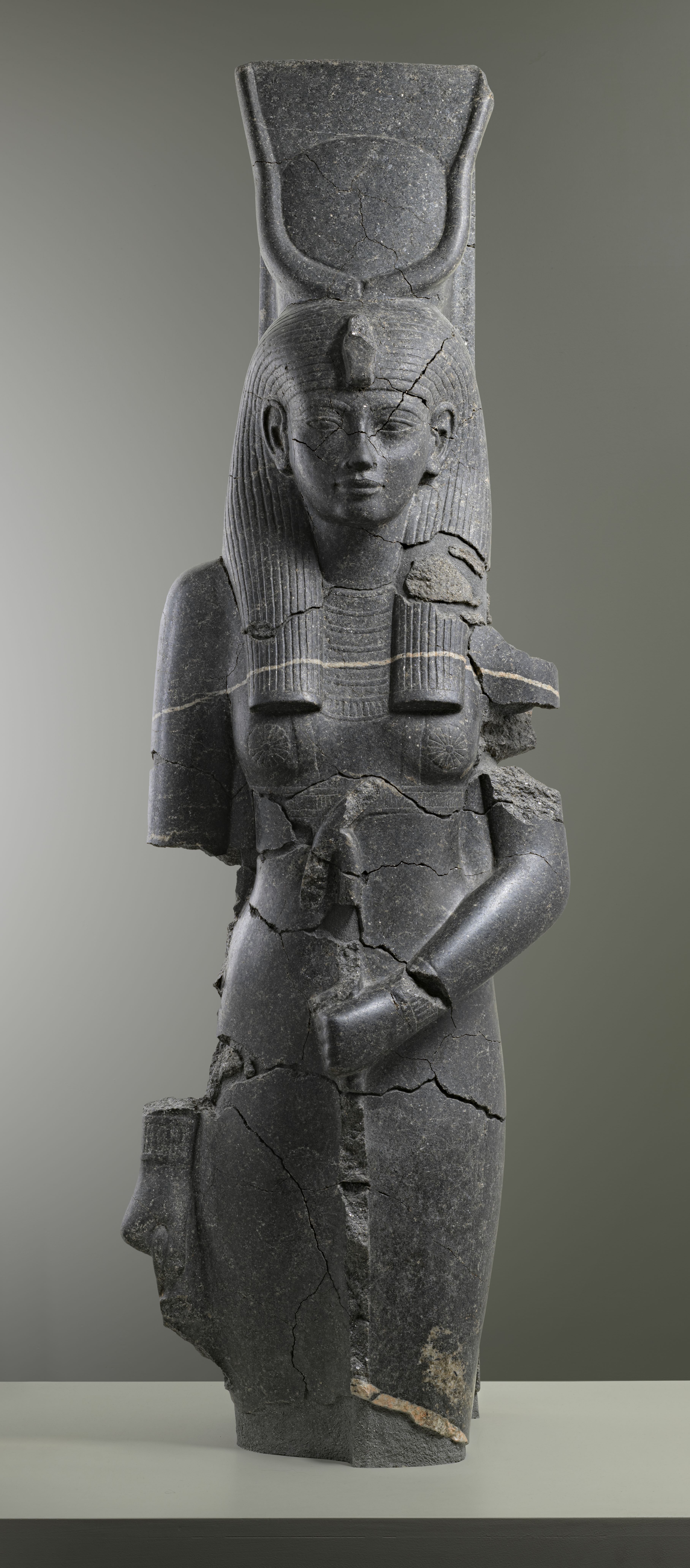
At Her temple at Philae (today Agilika) island, Isis had Her sacred barque for processions and, no doubt, oracles. The main sanctuary of the Goddess, in the center back of the temple, once housed both Her divine barque and a naos shrine where Her sacred image was kept. Note the arrangement in the Edfu photo above; that’s what it would have been like. What we see there today is just the Great Seat for the barque. Philae also has an unfinished barque station, the so-called “pharaoh’s bed” or “kiosk of Trajan,” where Isis’ barque could rest when outside of Her temple, or where visiting Deities could “park” Their own barques.
For a long time after other Egyptian temples had been closed under Rome’s Christian Empire, Philae continued to operate. In large part, it was supported by Merotic and Nubian devotees and their rulers. Even at a very late date, the Blemmye kings of Nubia had an arrangement to be able to borrow the sacred image of Isis, in its divine barque, and to carry it in procession throughout Nubia so that Isis could visit all Her shrines in that nation. As barque processions always had, part of the processional rites included oracles of Isis. A fifth-century CE historian, Priscus, noted that “in accordance with ancient law,” the Nubians borrowed the sacred image and “bring the wooden statue (xoanon) to their own country and, after having consulted it, return it safely to the island.”
Isis is the Lady of Oracles, the Wise One, the Powerful One. She was, and is, the One Who Listens, and She will come to us, in Her grace, when we invoke Her to our own divinations.

