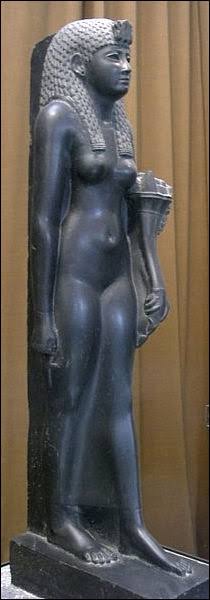
Do you remember a few years back when a spate of Cleopatra biographies came out all at the same time?
No? Okay, you might not. But I do. Why? Because of Kleopatra’s (Greek spelling) important connection with Isis. Stacy Schiff’s Cleopatra: A Life, and Duane Roller’s Cleopatra: A Biography attempt to help redefine Cleopatra from the seductive femme fatale of legend and imagination to the real-life Queen of Egypt that she was. She was the last pharaoh of Egypt and she was a very remarkable woman.
Kleopatra was of the Ptolemaic dynasty, the Macedonian Greek family who ruled in Egypt after the death of Alexander (the Great) Conquerer. She was not “the first of her name.” “Kleopatra,” meaning “glory of her father,” was the seventh of that name. The six Kleopatras before her were also powerful queens, wielding enormous power, either as co-rulers, or highly influential in their courts. Our Kleopatra was the daughter of Ptolemy XII Auletes and (probably) his queen Kleopatra V Triphania. I say probably because there are theories that suggest that Kleopatra’s real mother may have been of a native Egyptian priestly family. This idea is based on the discovery of the skeleton of Kleopatra’s blood sister, Arsinoë. The discoverers say that the skeleton indicates some subsaharan African ancestry. So, if Arsinoë had an Upper Egyptian mother, maybe Kleopatra did, too. But at this point, this has not been established.
On the other hand, Kleopatra was the only member of the Ptolemaic dynasty who learned to actually speak Egyptian, including several regional dialects. Her multilingual abilities enabled her to speak directly with the priests—and I hope, priestesses—of the temples without the need for a translator. (Most of the Egyptian temples left to us today were built during the 275-year reign of the Ptolemies. Kleopatra continued work on the temple of Hathor at Dendera, she built temples to celebrate the birth of her son, Caesarion, built a private temple of Isis on the island of Antirhodos (now submerged in Alexandria’s bay, and expanded the temple of Isis and Osiris at Taposiris Magna.)
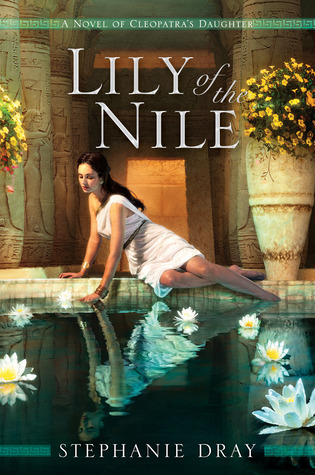
At the time all the biographies were coming out, novelists also took up the Kleopatra theme. Interestingly, several have published stories about Cleopatra’s daughter, Selene. One is Lily of the Nile by Stephanie Dray. In Dray’s book, Selene, like her mother, is a devotee of Isis. And here’s a bit of trivia for you: Stephanie used my Isis Magic as a resource for the Isian rituals that appear in her book; she even used excerpts from some rites (with my permission, of course).
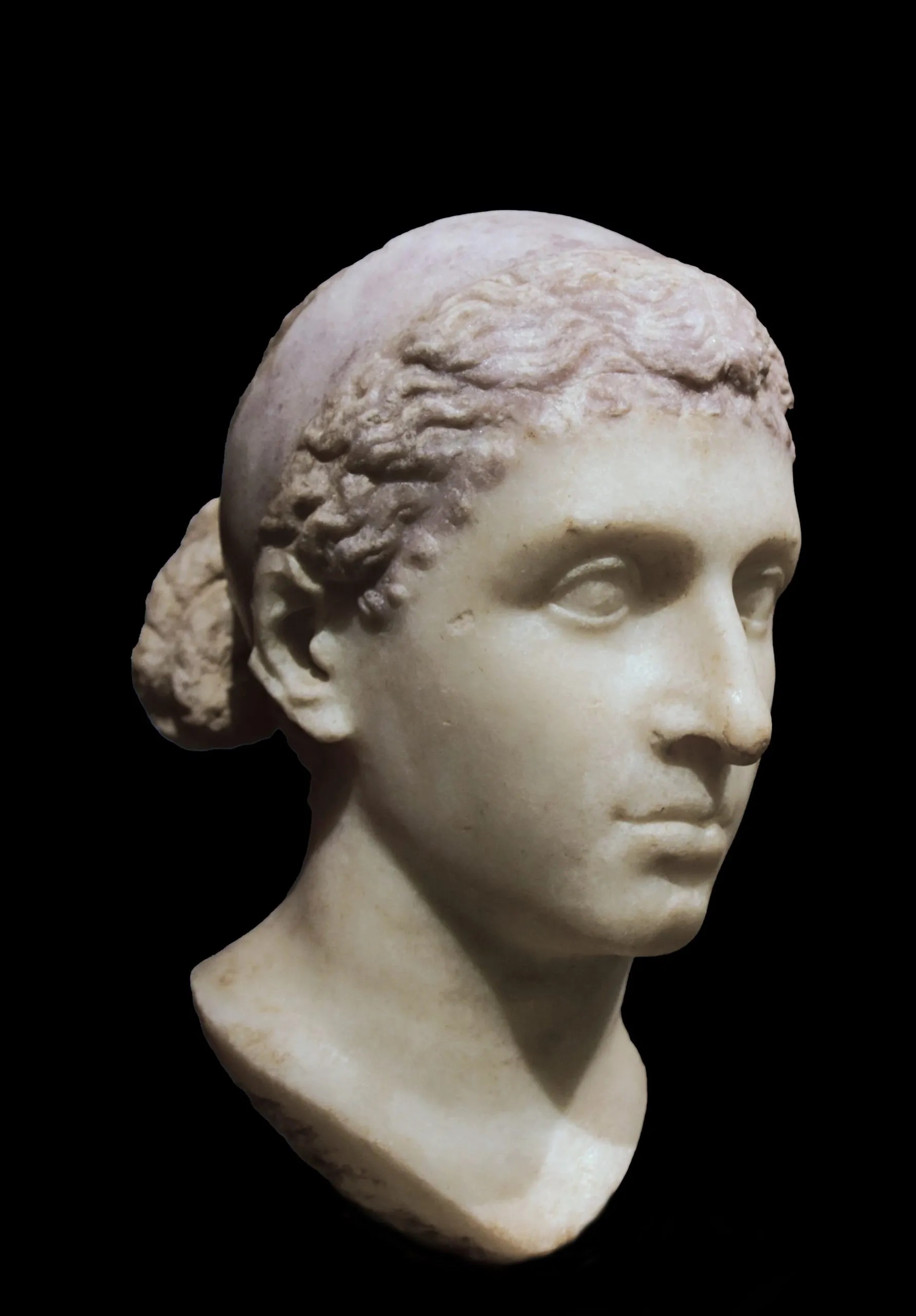
Exhibits about Kleopatra have been making the rounds of museums throughout the world during the last few years, too. There are been a number of them. Starting in November of this year, in Milan, an exhibition called Cleopatra: the Truth, will tell the story of the (ongoing) search for Kleopatra’s tomb by Kathleen Martinez and Egyptologist Zahi Hawass. Read about it here. Martinez is a Dominican archaeologist, best known for her work in search of the tomb of Cleopatra in Egypt. She heads the Egyptian-Dominican mission in Alexandria and is in charge of cultural affairs at the Dominican embassy in Egypt.
Martinez has been searching for the tomb of Antony and Kleopatra for years. Her latest work has brought her to Taposiris Magna, about 30 miles west of Alexandria. There Kleopatra expanded an existing temple to Isis and Osiris. Until Martinez’ work, the tomb of Kleopatra and Antony was believed to have been in Alexandria itself. Other Ptolemaic dynastic tombs are also believed to be in Alexandria, but none has yet been found.
According to the Greek philosopher and historian Plutarch and the Roman historian Suetonius, after Octavian defeated Antony and Kleopatra, and they both committed suicide (Antony first; she about a week later), Octavian let them be buried together. While he greatly wanted to show off the defeated queen in his triumph—which would have been both torture and humiliation for her—once both were dead, Octavian allowed the unfinished tomb (which presumably was being prepared for Kleopatra as pharaoh) to be completed, and both Antony and Kleopatra were buried together.
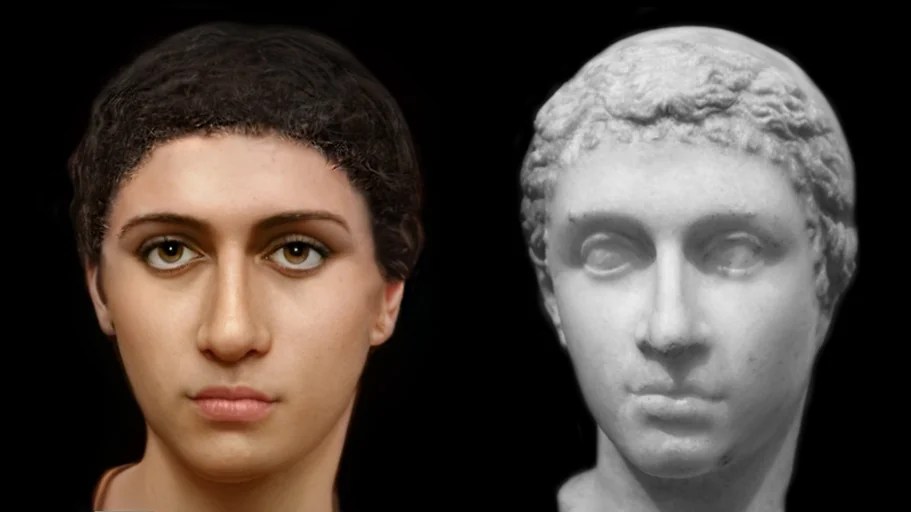
Plutarch tells us that during the war with Octavian, Kleopatra “had constructed tombs and monuments notable for their beauty and height, which were located near the temple of Isis.” This is why Martinez is searching areas near a temple of Isis, such as the Isis and Osiris complex at Taposiris Magna. Plutarch further says that Kleopatra collected a trove a royal treasures in gold and jewels—along with enough wood to burn it all and, presumably, deny it to Octavian.
Taposiris Magna means the “Great Tomb of Osiris.” So, it makes complete sense that there would also be a temple of Isis there. Martinez has discovered the foundation deposits of just such a temple there, which link the temple to the Ptolemies (Ptolemy IV and Arsinoë III specifically) and to Isis. The dedication reads, “The King of Upper and Lower Egypt, Ptolemy, living forever, beloved of Isis, son of Ptolemy, King of Upper and Lower Egypt, and his wife, Arsinoë, both benevolent Gods, consecrated this temple to the mother Isis.”
Here’s a link to a CBS story on the discoveries. Here’s some more about Taposiris Magna. If you want to see a picture of the foundation plaque (it is made of glass, which is interesting), go here. It was on temporary display at the Bibliotheca Alexandrina.
There’s another Kleopatra-linked Isis temple that you may have heard of, and which I mentioned above. This one was on the royal island of Antirhodos, in the harbor of Alexandria, and it was Kleopatra’s private Isis temple. Today, it is underwater and has been studied by Franck Goddio and his team. If you’re interested, here’s a longish video about their work including illustrations of what the temple likely looked like. Very “Greco” and a little bit “Egyptian.” Goddio suggests that it is near this Isis temple that Kleopatra had her mausoleum built, and that it, like a good deal of the royal quarters in Alexandria, is now sunk below the waters of the harbor. This makes a certain amount of sense if for no other reason than travel distance. Alexandria was the center of Kleopatra’s fight against Octavian. It would have been much easier to have the tomb prepared, and to have Antony moved there after his suicide attempt, if the mausoleum were nearby, rather than 30 miles away. But who knows?
Other suggestions are that they were buried near the still-undiscovered tomb of Alexander the Great in a place called the Soma, or that the Ptolemies had above-ground tombs in the royal quarter, that are now underwater due to the earthquake.
Many thanks to the priestesses of the Mt. Shasta Goddess Temple, who got me started on this track. Next time, we’ll look at Kleopatra’s connection with Isis Herself. How genuine was it?

