
For me, there are two things that make August wonderful, here in Portland, Oregon. One of them is all the produce that I can go pick on Sauvie’s Island, fresh from the farmers’ fields. (My countertops are full of peaches and tomatoes and peppers right now.) The other—and the more important for us local Isiacs—is the heliacal rising of the Star of Isis, Sirius.
While everything else starts to crisp in the late-summer heat, I am refreshed in the cool morning of Her rising power.
Now some of you may be saying, “wait, wait, I thought that happens in July.” It certainly could. When you are able to see Her heliacal (“before the sun”) rising depends on where on this globe you are.
Here in Portland, in 2026, Sirius rose yesterday, August 22, about an hour before the sun. (If you’d like to know when She rises in your area, here is a free, online calculator. Just give it a date near when you think Sirius might rise in your area (in the northern hemisphere, try starting on July 1st, for instance), and let it use your local time. Then look down the resulting chart until you no longer see “Not observable” and instead see a date and time. Hover your mouse over the time for additional details. Basically, you’d want to be in place about an hour before the given times.)

Alas, here in Portland, as is so often the case, we had cloudy skies yesterday morning, so I was unable, once again, to see Her rising. However, the cloud cover is better for our firefighters, so absolutely not complaining.
In my own little part of the Universe, however, something else momentous happened yesterday. The Lotus Temple of Isis, which has been in my backyard for 16 years, was taken down, and is being moved to storage until it can be repaired and re-erected at Ffynnon. Many blessings to all of you who helped bring the Lotus Temple to her new home.
Isis & Sirius & Other Temples
And speaking of temples, did you know that some Egyptian temples were oriented to the Star of Isis? While Isis has connections to both the sun and the moon, the heavenly body in which I most easily see Her is the star—Her star: Sirius (Sopdet in Egyptian, Sothis in Greek).

I fell in love with Her as Lady of the Star the first time I saw Sirius through a telescope. As I watched, Her brilliant star sparkled with rays of green and blue and pink and white. It was incredibly, unutterably beautiful. It was alive. And pure.
Likely, you already know why Sirius was important to the ancient Egyptians, so I won’t repeat that here. But I would like to add a few interesting bits about Sirius that you may not know about; in particular, the orientation of some Egyptian temples and shrines to Sirius at the time of their construction. For instance, the small Isis temple at Denderah and Isis’ great temple at Philae seem to have been oriented toward the rising of Sirius. Philae may even have a double stellar orientation: one axis to the rising of Sirius, one to the setting of Canopus.
Overall, Egyptian temples have a variety of orientations. A survey of temples taken between 2004 and 2008—that actually went to the temples in Egypt and measured the orientation—showed that most temples were oriented so that the main entrance faced the Nile. But not only that. It seems that the temples were also oriented toward other astronomical events, most especially the winter solstice sunrise, which of course makes very good sense as a symbol of rebirth.
Orientation to Sirius is rarer and harder to be certain of because the earth’s position in relation to the stars has shifted over the millennia.
A Horus temple, called the “Nest of Horus” on the summit of the highest peak of the Hills of Thebes, seems to have been oriented to the heliacal rising of Sirius around 3000-2000 BCE. Nearby, an inscription carved in rock during the 17th dynasty (1580-1550 BCE) records the observation of just such a rising of Sirius. This high place would have been ideal for Horus in His nest to await the coming of His mother Isis. On the other hand, the archaeoastronomers who did the survey I mentioned believe that it may also be oriented to the winter solstice sunrise, an event closely associated with Horus, son of Isis.
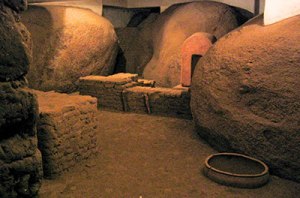
Another temple that may have a Sirius orientation is the archaic temple of the Goddess Satet on the island of Elephantine. The original temple was built amidst the great boulders on the island and really is quite simply the coolest temple ever. It seems that when it was built (around 3200 BCE) the rising of Sirius and the rising of the winter solstice sun were at the same place (though not the same time) in the sky—so it could have been built to accommodate both important astronomical events.
After the initial study, the same team followed up with a survey (in 2008) of some temples in the Fayum that they hadn’t been able to study before as well as temples in Kush. They found generally the same results, except for the Nile orientation, since many of these temples were built far away from the river.
At Philae, the researchers made note of a son of a Priest of Isis, Wayekiye, son of Hornakhtyotef, who was “hont-priest of Sopdet” and ”wab-priest of the five living stars” (the planets) and “chief magician of the King of Kush.” This inscription on Isis’ Philae temple dates to about 227 CE. It emphasizes the importance and sacrality of the study of celestial objects and events to the kingdom and it is quite interesting that this was the work of the Chief Magician. This study also revealed that most Kushite temples and pyramids were oriented either to the winter solstice sunrise or the rise of Sirius.
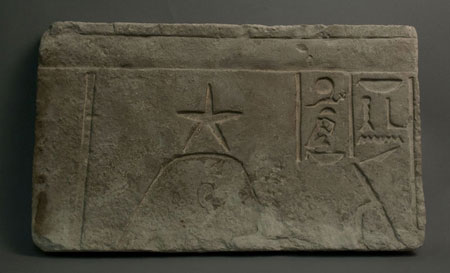
Another interesting thing the study found was that by the time of the New Kingdom, in the 34 temples that were unmistakably dedicated to a Goddess—specifically Isis or a Goddess associated with Her—the most important celestial orientation point was the rising of Sirius. But, in addition to Sirius, the star Canopus was also a key orientation point. According to their data, Goddess temples, in general, were more often aligned with the very bright stars, Sirius and Canopus, while God temples were more often oriented to key solar-cycle events. Isn’t that interesting?
And so, for me and other Isiacs at the 45.5th parallel, the New Year has come. And this year, for me, began with the moving of the Lotus Temple to its new home, just as the Philae Temple of Isis was moved from its original home on the island of Philae to its new home on the island of Agilika. I look forward to seeing it re-erected in the future.


august was also my move from New York to Pennsylvania! Now I wish I could find an outdoor statue of our Lady.
Bob Koenig
Your Summer Rite for the House of Isis is an absolute joy. This year when I arrived at the gratitude pronouncements I just kept going and going (it was a solo rite for me this year). My heart is awake and alive.
Someday I’ll have the wherewithal to actually wait on some high place to watch the star rise. I came very close once and the Goddess in Her mercy sent a huge cloud of fog into the East Bay.
Yes, we so often have that mercy here, too. Blessings to you!
Is