I’m going to keep a little reminder at the top here for a few more days. If you plan to purchase the new 25th anniversary edition of Isis Magic, you can save 25% with the code ISIS25 at checkout from the publisher’s site. The offer is only good until 7/15/26, which is when the book is officially available. Unfortunately, it only applies in the US. Sorry, folks!

Many of you are probably familiar with the Isis aretalogies, the self-statements or praises of the Goddess, written in Greek (one in Latin), that helped spread the “gospel of Isis” throughout the Meditarranean. If not, you can get an introduction here. (And if you’re a fan of the aretalogies, you’ll find a brand new section on them in the new edition of Isis Magic, as well as how to create an Isis aretalogy of your own for Her, and from Her.)
I’ve been reading a book about the worship of Isis in the greater Mediterranean world and it has some interesting details about the Isis aretalogies, and how the may have been used, that I’d like to share with you.
Depending on what any given researcher counts as an aretalogy, there are about about six to ten extant aretalogies. (The aretalogies are not the same as hymns to Isis; there are a LOT more of those.) The aretalogies are in two forms, either praising the Goddess in the third-person (O Isis, You are…) or the Goddess Herself speaking in the first-person, like this:
I am She that riseth in the Dog Star.
I am She that is called Goddess by women.
For me was the city of Bubastis built.
I divided the earth from the heaven.
I showed the paths of the stars.
I ordered the course of the sun and the moon.
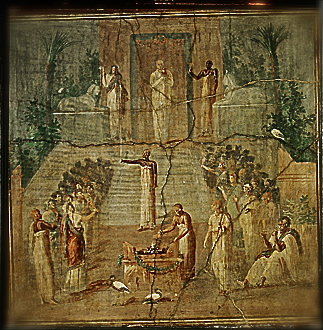
To date, researchers have not found an aretalogy in every Isis sanctuary in the Greco-Roman world. But in the sanctuaries that did have them, they seem to have been displayed so that they could be read by literate devotees.
Because the reception of Isis and Her companion Egyptian Deities (Sarapis, Anubis, and Harpokrates) was such a striking phenomena in the history of religions, much scholarly ink has been spent in trying to trace Their reception, and explain how and why it happened. Often, they say that Isis became so changed from Her Egyptian Self as to be unrecognizable, and She became this entirely new, Hellenic Goddess. I disagree. I write about that here. (And if you’d like more on Isis’ changes over time, here’s another post to check out.)
Indeed, I think the fact that Isis was—and is—an Egyptian Goddess was—and is—one of the things that was, and yes, still is, appealing about Her to Her adoptive devotees. I know it is for me. And Egypt was just as fascinating, exotic, attractive, and appealing for people in the ancient Mediterranean world as it is for many people today.
In that world, Egypt was imagined as a place of “experimentation, wonder, and timelessness,” according to the author of that book I mentioned (Isis in a Global Empire, Greek Identity through Egyptian Religion in Roman Greece by Lindsey Mazurek). Egypt had a big rep for powerful magic, which made it both alluring, and a bit titillating, at the same time. Egypt was ancient, influential, and especially in pharaonic times, politically powerful. It was also known to be the place in which much intellectual, philosophical, and religious thought had originated.
On the other hand, writers such as Herodotus also portrayed Egypt as a kind of topsy-turvy land where normal Greek ways of life were turned on their head. (According to him, Egyptian women work in the marketplace while Egyptian men stay home; women pee standing up and men sitting, for a couple examples.) Rome had an even more, um, complicated relationship with Egypt. Yet Roman temples of Isis, such as those in Pompeii and Herculaneum, included Egyptianesque paintings to enhance, not dilute, the Nilotic atmosphere.
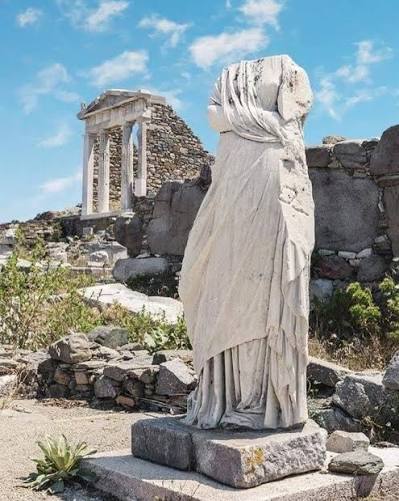
When Isis and Sarapis first came to the Greek sacred island of Delos (early 3rd century BCE), those who established the sanctuary there emphasized their Egyptian roots, and stressed that the original founding priest was from Memphis, Egypt itself—and thus had genuine authority and knowledge.
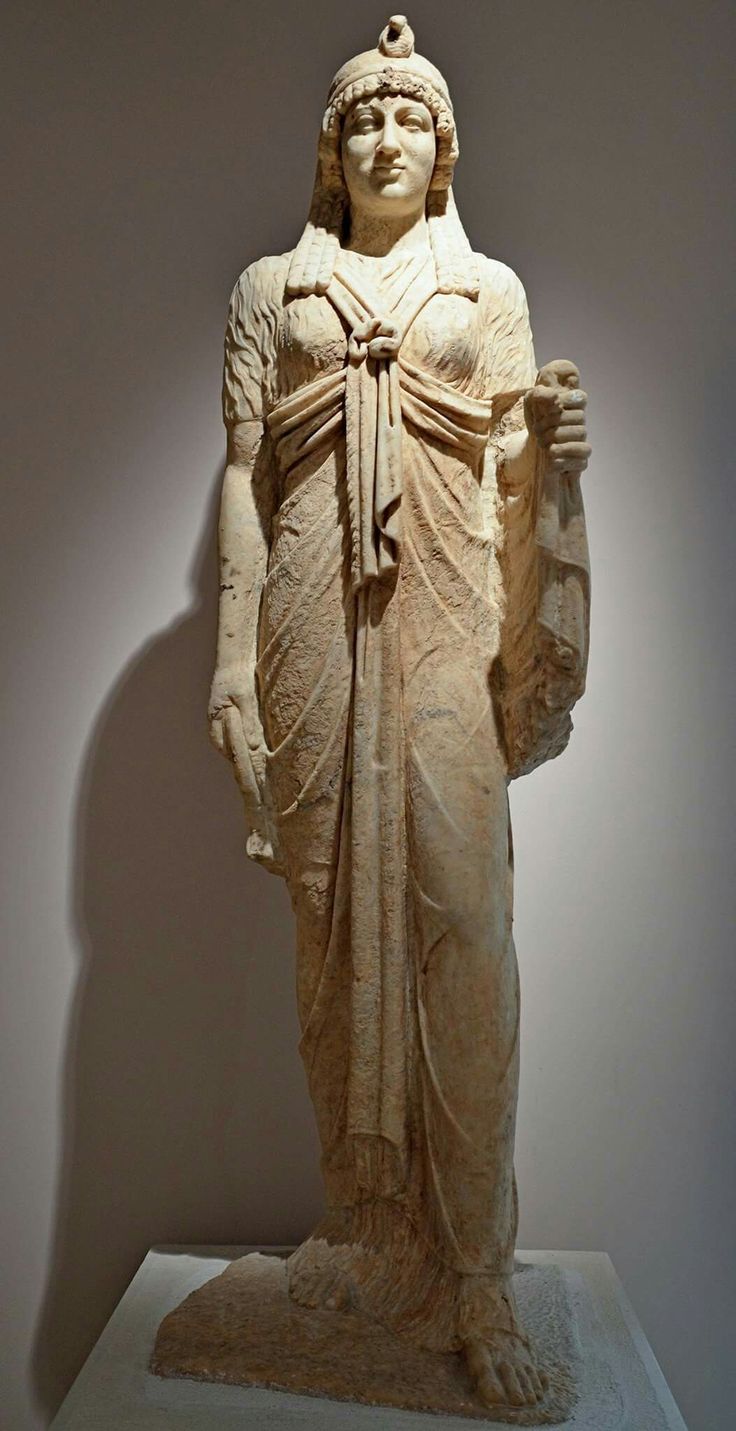
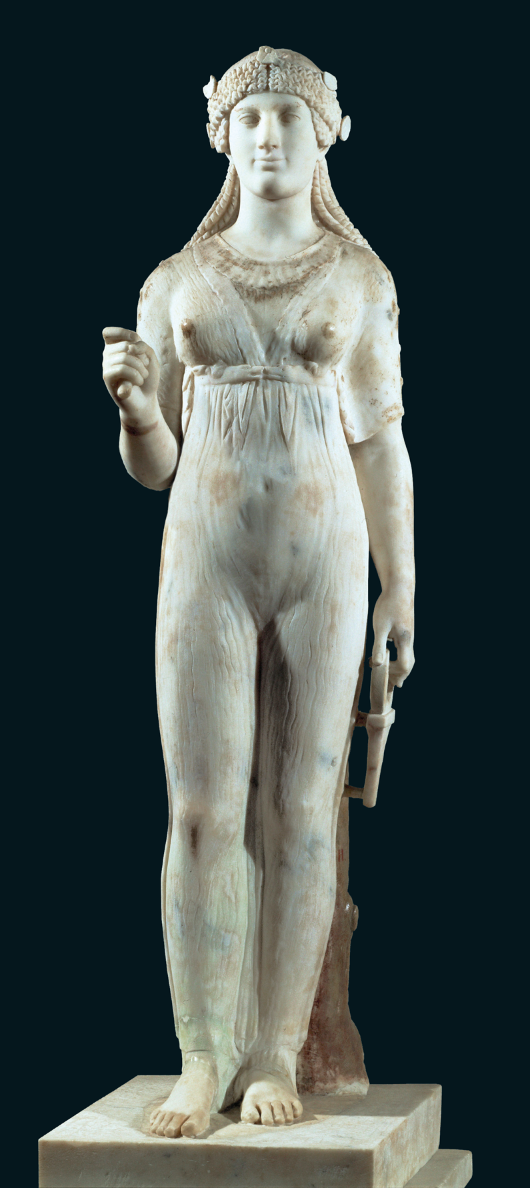
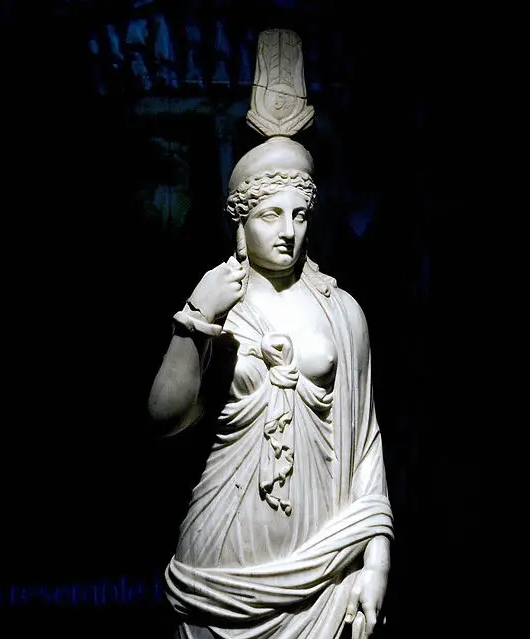
Yet, to better fit in with the lands into which She traveled, our Wandering Goddess would switch up Her clothing, and very often, Her hairstyles. Greek images of the Goddess might show Her in Greek dress, or in Greco-Egyptian Alexandrian dress, but with a hairdo that better suited the local culture. Tales of the wanderings of the Goddess also enabled Her Greek and Roman worshipers to feel more closely connected with Her. If, in myth, the Goddess Herself traveled to their lands, and then Her actual devotees arrived, it would have made sense to establish a sanctuary for Her locally.
Scholars think that the Isis aretalogies also enabled Isis devotees to feel closer to the Goddess because they helped new devotees learn about Her. So, now the Goddess’ dress looked a bit more familiar—but still exotically Egyptian enough—and She had come to their very own town, and they could then learn about Her through Her aretalogies. This combination of things made it that much easier for people to explore a relationship with this “new” Egyptian Goddess.
The only aretalogy found in situ, that is, in its original location, is the one from Kyme, Türkye. It was found in a public area of the sanctuary, which meant that people in the general community would have access to it—as well as devotees and clergy. We also know that it was a votive gift to Isis.
A number of the aretalogies were probably copies of each other. Scholars seem to agree that the texts were meant to be read aloud because the copies were all punctuated in the same way. They explain that this consistent punctuation probably means that they were intended to be read in the same way, perhaps as part of a ritual performance.
If that is so, it brings up an interesting point. I wonder whether the ritualist doing the reading (or better yet, recitation?) was in the Kheper (or “Goddessform” or “Aspecting” for those of you who use those terms) of Isis? Unfortunately, we simply don’t know. But if it was so, it likely wasn’t an Egyptian who was doing that ritual role. While it was not unusual for Egyptian ritualists to be in the Kheperu of Deities during their rites (we have evidence from both funerary and temple rites), it was rather unusual for Greek and Latin speakers. Perhaps this was one of the things these non-Egyptian Isiacs found so powerful and appealing about their adopted Goddess.
Mazurek suggests that such readings would have primed Isis worshipers to expect the appearance and intervention of Isis to their own prayers, and would have “ingrained the universalizing ideas of the Egyptian deities deep into the memories of devotees.” As Isis gained more of Her ten thousand names—by being identified with Goddesses from throughout the Mediterranean regions—Her many names were also reflected in the aretalogies.
If you recall, in Egypt these kinds of Divine identifications and blendings happened all the time. Deities can be each others’ Bas or “come forth as” each other. If the Isis cult, as it came into the larger Mediterranean world, was indeed brought by Egyptians, it would have been very natural for them to make these kind of identifications with Greek and other Goddesses to help people better understand Isis as they developed Her worship in their local areas. Here’s an example of it from an Egyptian, writing in Greek, found in a Greco-Egyptian sanctuary, in the Egyptian Faiyum (where a number of Greeks had settled):
All mortals who live on the boundless earth, Thracians, Hellenes, and all that are barbarians, call You by Your beautiful name, greatly honored among all, each in his own tongue, each in his own land. The Syrians call You Astarte, Artemis, Anaia and the Lycian tribes call You Leto, the Sovereign. The Thracians call You also Mother of the Gods; the Hellenes call You Hera of the Great Throne and Aphrodite, and good Hestia and Thea and Demeter. But the Egyptians call You Thiouis [an epithet of Isis meaning “the Only One”], because You alone are all other goddesses named by the races of men.
You can read all about these hymns and their author here.
I wonder whether we will find more Isis aretalogies as more ancient sanctuaries are discovered and excavated. It does seem that the aretalogies most likely helped to spread Isis’ worship, making Her understandable and desirable for more and more people throughout the Greek and Roman worlds.
I also wonder how much these texts were intended as propaganda to do precisely that, and how much of the growth of Her worship was organic. Certainly the Ptolemies benefited from having Egyptian Deities widely known and loved. Yet, outside of Egypt, Isis’ worship was more often spread by private persons—merchants, sailors, and other travelers, particularly those who had enough funds to actually build sanctuaries for Her. (Read more about Isis outside of Egypt here.)
And today? How did Isis come to your home? How did you discover Her?
 Isiopolis