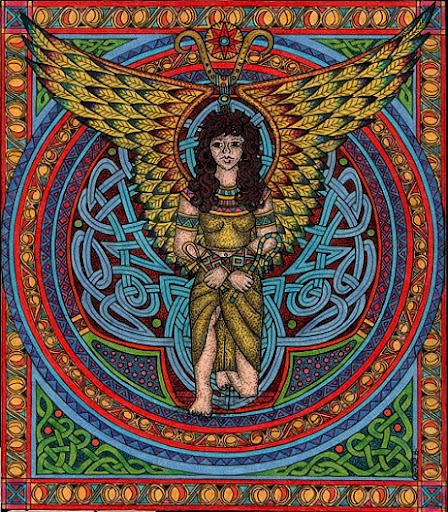
I have for you today, my dear Isians, the slightly strange tale of how a magic healing spell of Isis may have come to be used as a magic healing spell in Ireland.* I know. But let’s see where this goes.
The healing spell in question was one of the most popular in Egypt—indicated by the fact that we have at least eleven copies of it surviving. The spell is in the form of a historiola. That is, it tells a myth, then the statement that the human sufferer will be healed, just as the sufferer in the story is healed. In this case, the myth is the story of Isis and the Seven Scorpions, and the magic is for someone who has been stung by a scorpion (and any other venomous creature).
Such venomous bites and stings happened fairly frequently in ancient Egypt. There was quite a variety of scorpions, ranging from less to quite harmful; but any sting was especially dire if it was a child or a cat who was stung.
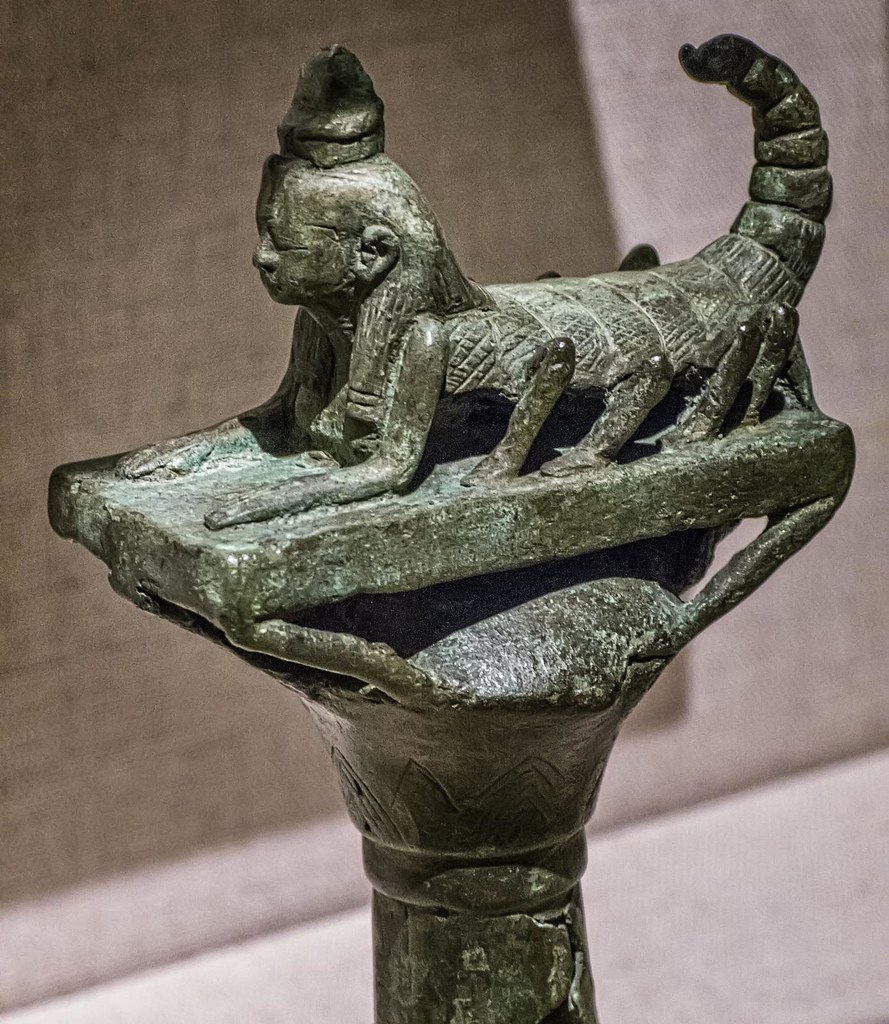
But Our Lady, Who is a Scorpion Goddess Herself, has quite a good relationship with scorpions. At Isis’ sanctuary at Koptos, it was said that during the time when the women ritually lamented with the Goddess, they could walk through a mass of scorpions unharmed. Late legend had it that scorpions would refuse to sting any woman—or any worshipper of Isis, for that matter—out of respect for the Goddess. And, of course, one of Isis main myths has to do with Her seven scorpion companions. Her son Horus, too, has a way with scorpions, going so far as to marry seven Scorpion Goddesses.
In case you’ve forgotten the myth, let me refresh your memory.
In the tale, Osiris is dead, and Isis, disguised as a human, is fleeing in an attempt to hide Her newborn child, Horus, from Set. Seven magical scorpions accompany her. In what smacks of a ritual formula, we are told that the scorpions Tefen and Befen walked behind Isis. On Her right was Mestet, on Her left, Mestetef. Before Her walk Petet, Thetet and Maatet.
Upon reaching a city at the edge of the papyrus swamps, Isis found She was weary and approached the home of the chief woman of the district for shelter. But seeing the scorpions, the woman was afraid and angry that anyone would dare approach her home with these dangerous creatures. She refused the Goddess. The scorpions became angry at the rejection and vowed revenge. While Isis found refuge with a poor woman, the scorpions gathered all their poison together and placed it in the tail of Tefen. Tefen entered the home of the chief woman and stung her young son who fell instantly from the terrible poison. Then a fire broke out in the woman’s house, followed by unseasonable rain. (Perhaps like the fever and sweating one might get from a poisonous bite.) But Isis took pity on the child and cured him. The Goddess commands the scorpions’ poison to “fall down upon the ground,” which it does, and the child is cured. With the kindness of the Goddess, the chief woman was ashamed of her behavior and filled the home of the poor woman who had sheltered the Goddess with beautiful gifts from her very own home.
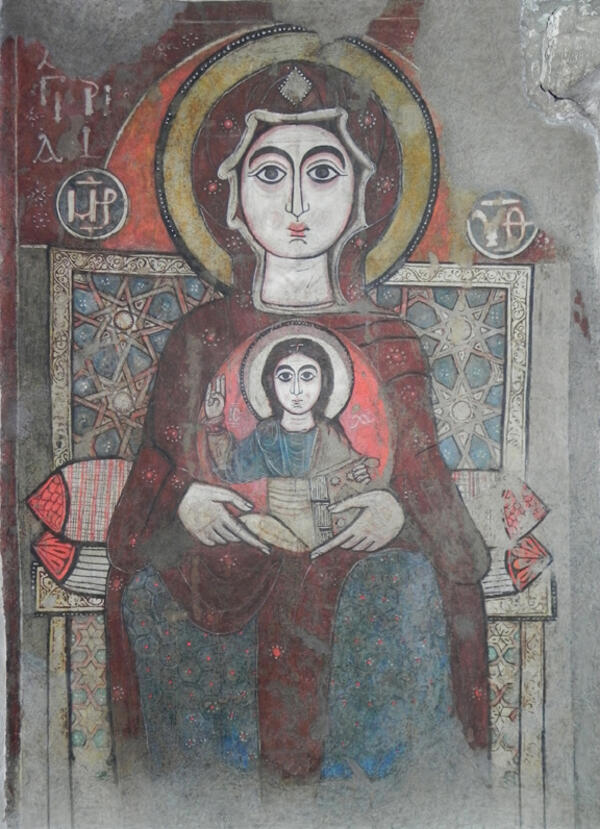
After relating the myth, there are several scorpion-sting healing spells, including instructions to make a poultice from “bread of barley,” salt, and garlic to help the healing.
I’m reading a paper by a researcher who works on the transmission of folklore across nations. Lloyd Graham sees the Isis myth as the “Ur-tale,” that is, the original tale from which all the others may have developed. To see how the spell might have traveled, we need to reduce it to its key components: a Deity disguised as a human (not an uncommon motif), the Divine guest is given a poor welcome, an innocent suffers because of the poor welcome, the Divine guest takes pity and cures the sufferer, and the one who mistreated the guest repents; followed by a magical charm, and specific things to be applied to the wound.
In the Greek islands, in Italy, in Hungary, and in Ireland we find very similar tales. Usually, the disguised Deity is Jesus (or a monk or a saint). The good guy in the story is a husband, or there’s an innocent child, while the bad guy is invariably an unkind wife. Usually, the inhospitable one is rich, while the welcoming one is poor, as in the Egyptian tale. Sometimes the good husband or innocent child is the sufferer, sometimes the wife herself suffers.
A Hungarian version has St. Anthony traveling with “seven demons of illness,” like Isis’ dangerous companions. In some versions of the story, one of these demons inflicts the pain, rather than the saint—again like Isis’ scorpions. In other versions, Jesus (or the saint or the monk) eventually heals the sufferer—often out of pity for the innocent sufferer, rather than in response to the distress of the wife. In general, the ailments are pains in one part of the body or another, rather than venomous bites. There is usually a repeated, spoken charm, and often bread, salt, and garlic are involved in the cure. In a Hungarian version, the charm even instructs the pain “to go down under the ground” or prays that the illness be “taken into the earth,” just as Isis instructs the poison to “fall down upon the ground.” There are enough parallels that a number of other scholars have pointed out the resemblance to the Egyptian original, as well.
Interestingly, the very closest European charm to the Egyptian Isis spell is the one from Ireland. It was extremely popular: 127 versions of it have been found to date, all of them in Irish language, plus there are some Gaelic versions from Scotland.
Here’s the Irish version: Mary and baby Jesus are traveling as humans through the Irish countryside. (In some versions, They are traveling in Egypt, running from Herod. So, like Isis and Horus, They are fleeing an enemy to protect a Holy Child.) They seek lodging for the night, but are refused by the unkind wife. Her kind husband, however, offers them somewhere to sleep.
During the night, the husband suffers a sudden-onset pain (the Irish word used in some spells can also be indicative of an animal bite as well as a sharp pain) and the wife asks the strangers for help. Mary does so by placing baby Jesus’ hand over the site of the pain and reciting a charm that translates, “A gentle man and a fierce woman, who left the Son of God lying in the flax.” Then there are instructions for some herbal cures to follow the incantation.
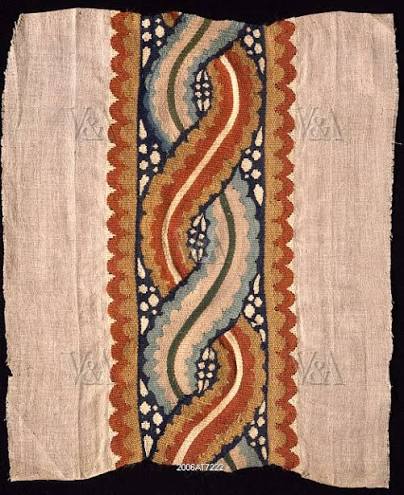
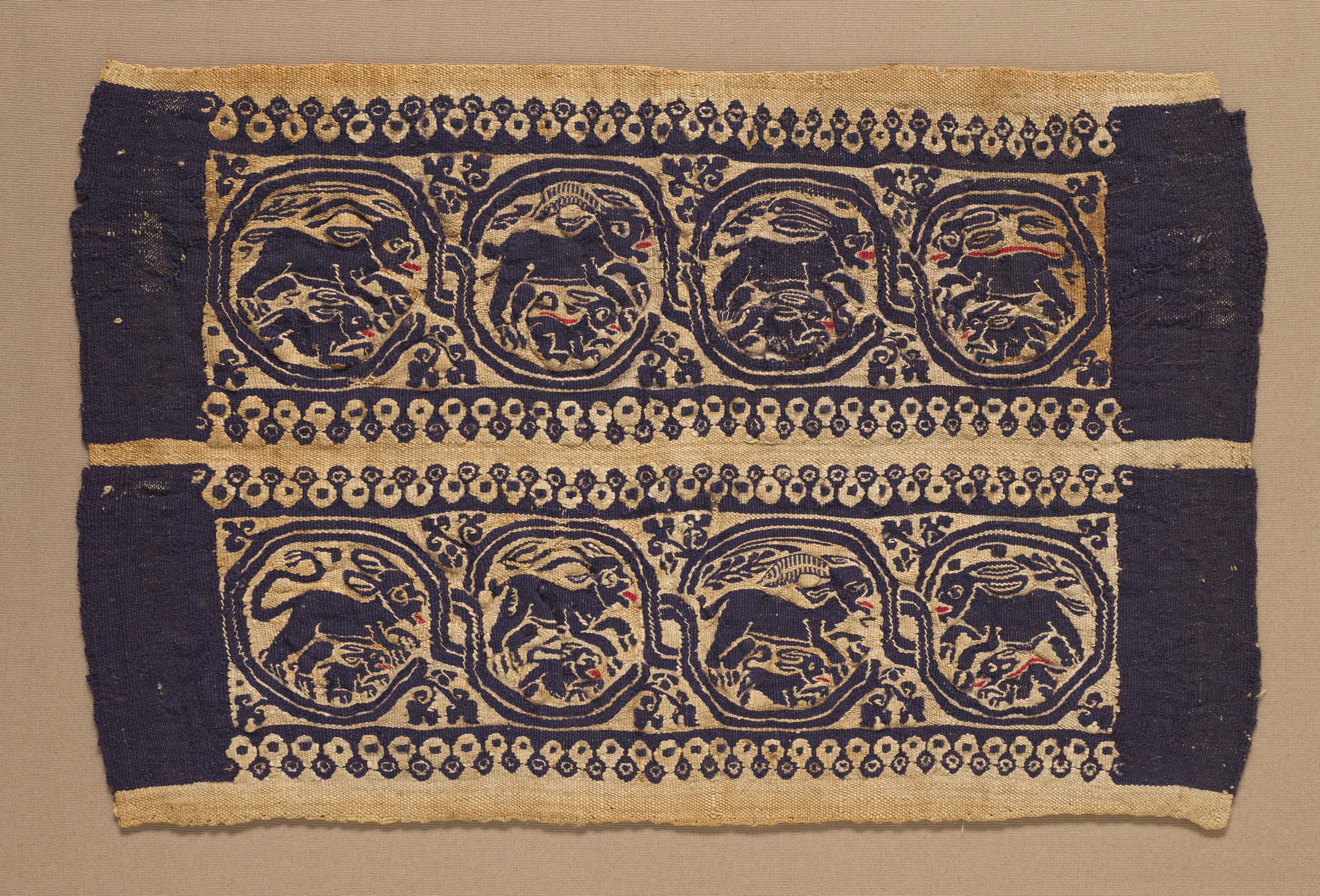
Since this spell is much closer to the original, perhaps its journey to Ireland was more direct than the other versions. And indeed, there is evidence that some early Coptic monks migrated to, and settled in, Ireland. The Copts were early Christians from Egypt, but they also tended to retain the powerful magic that was part of their Egyptian heritage. We have copies of quite a few Coptic spells, and it seems clear that many just substitute the names of Christian Deities for the original Egyptian ones, though this particular spell is not among the ones we have. Egyptologist Robert Ritner suggests that the Book of Kells madonna and child image bear similarities to Egyptian Coptic images, including the intricate interlacing patterns. There are even Coptic legends that Jesus was born in the Egyptian Faiyum and spent His childhood in Egypt. Coptic Christians first came to Ireland in the 4th or 5th centuries CE, and the Book of Kells dates to about 800 CE, providing plenty of time for such influences to be well integrated in Ireland. And indeed, Ritner credits Coptic Christians with introducing a number of Egyptian motifs to Ireland.
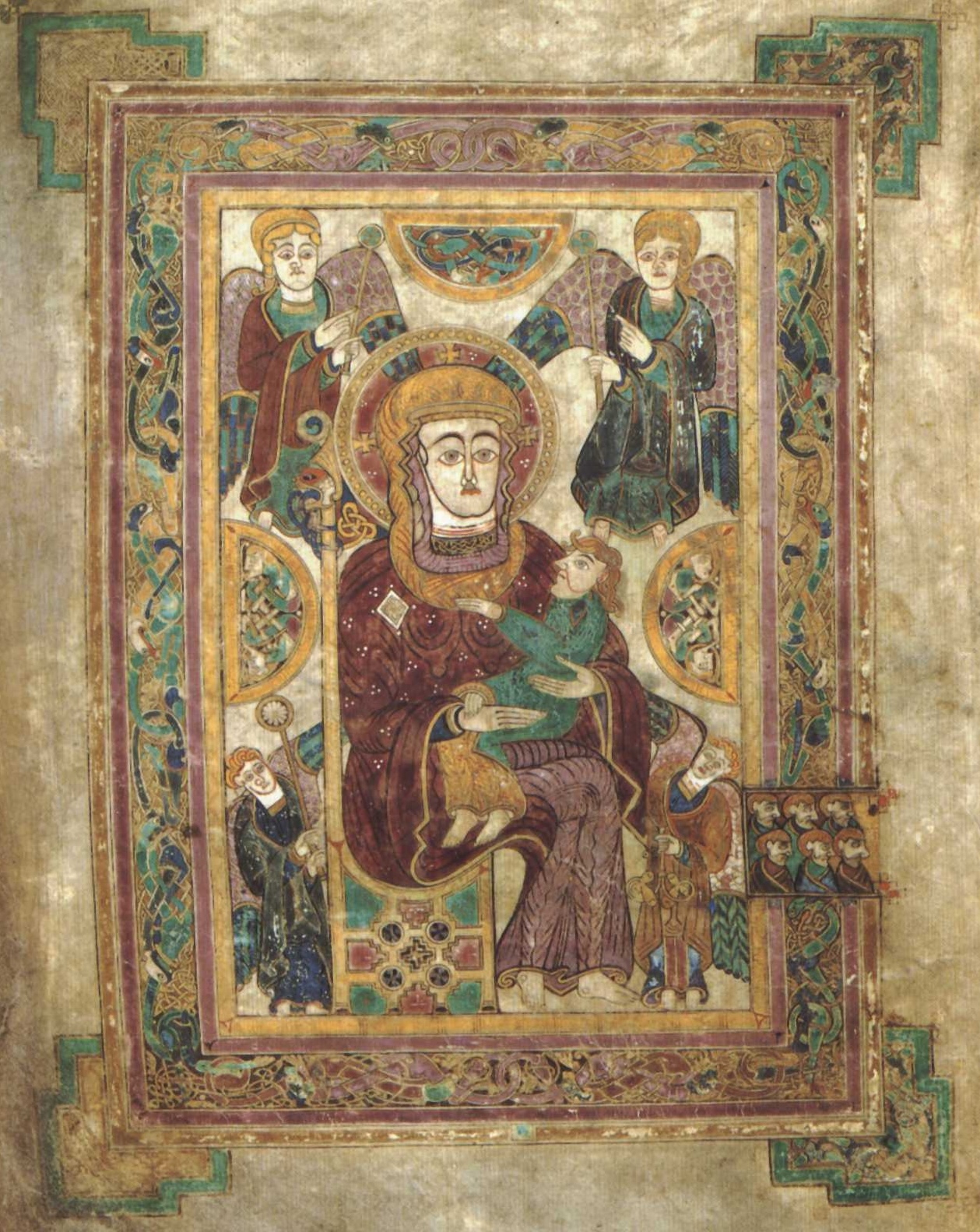
Similarities between the Child Gods, Horus and Jesus, are not hard to find—even when it comes to venomous beasties. Child Horus is often show holding dangerous animals, including scorpions and serpents, harmlessly in His hands, and both He and Isis are appealed to as Savior Deities. Jesus, too, had many folk tales of curing snakebite and the Gospel of Pseudo-Mathew has Him declare that all beasts must be tame before Him. Most of us are already familiar with how easy it was to assimilate Isis, Mother of the God, with Mary, Mother of the God, so there’s no need to go into that here.
So, there we are. It seems an ancient Egyptian Isis spell may have found its way to Ireland. In the study of cultural diffusion, it isn’t all that unusual for a particular motif, such as this one in the tale of Isis and the Seven Scorpions, to be accepted far from its original home. The story had an important moral lesson, and was a magical cure for pain. It seems reasonable that it should have been preserved, simply changing the names and details to suit the local culture. The moral lesson—be kind to strangers—is universal. In fact, it is important to our times right now. Should we fail to heed it, the scorpions will surely sting us, too, and more painfully than they already has. Let us work for kindness—and justice—and hope that the Goddess’ mercy will help us heal.
*FOI members will know that the international Fellowship of Isis was established in Clonegal Castle in County Carlow, Ireland in 1976.

