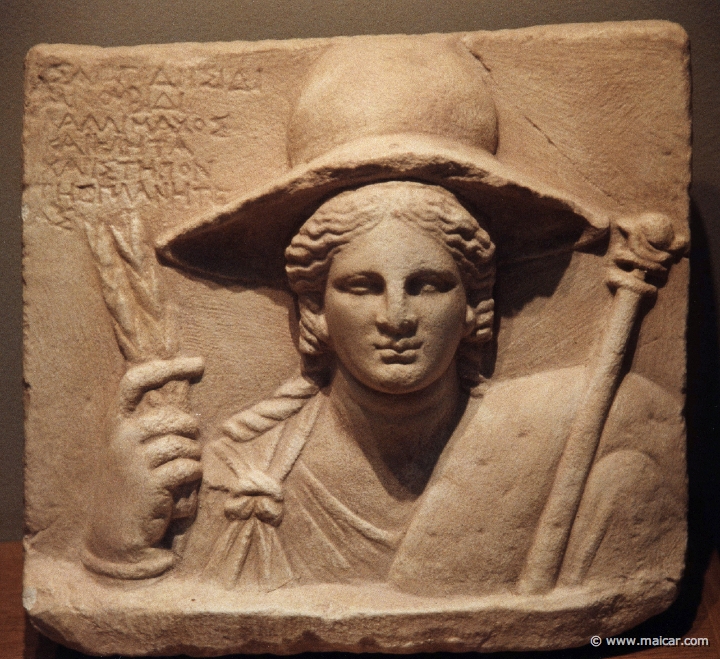

A few weeks ago, we talked about Isis as perhaps the most syncretic Goddesses of all time. And one of the important, non-Egyptian syncretisms we noted was the connection between Isis and Demeter. Let’s talk about that a bit more.
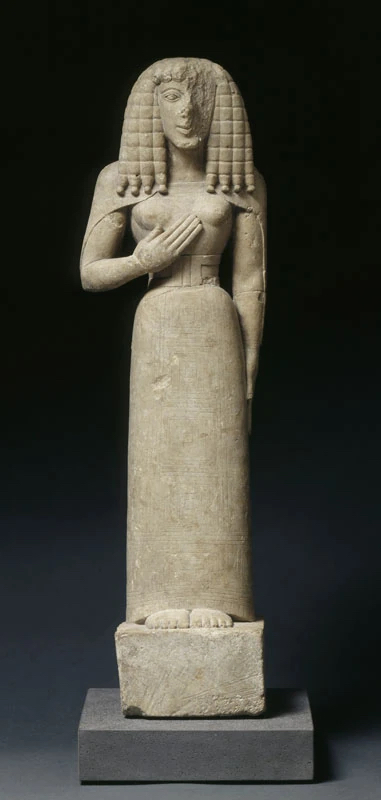
about 640 BCE
With its monumental architecture, distinctive art, (often) stable rulership, and powerful reputation for magic, Egypt simply could not be ignored. It impressed anyone who visited its cities and vast temples or traveled the length of the blue-green river that united the Two Lands. Oh, and all the women were legendarily beautiful, of course. Indeed, in the opinion of the third-century BCE Greek writer Herodas, “Egypt is the very home of the Goddess.”
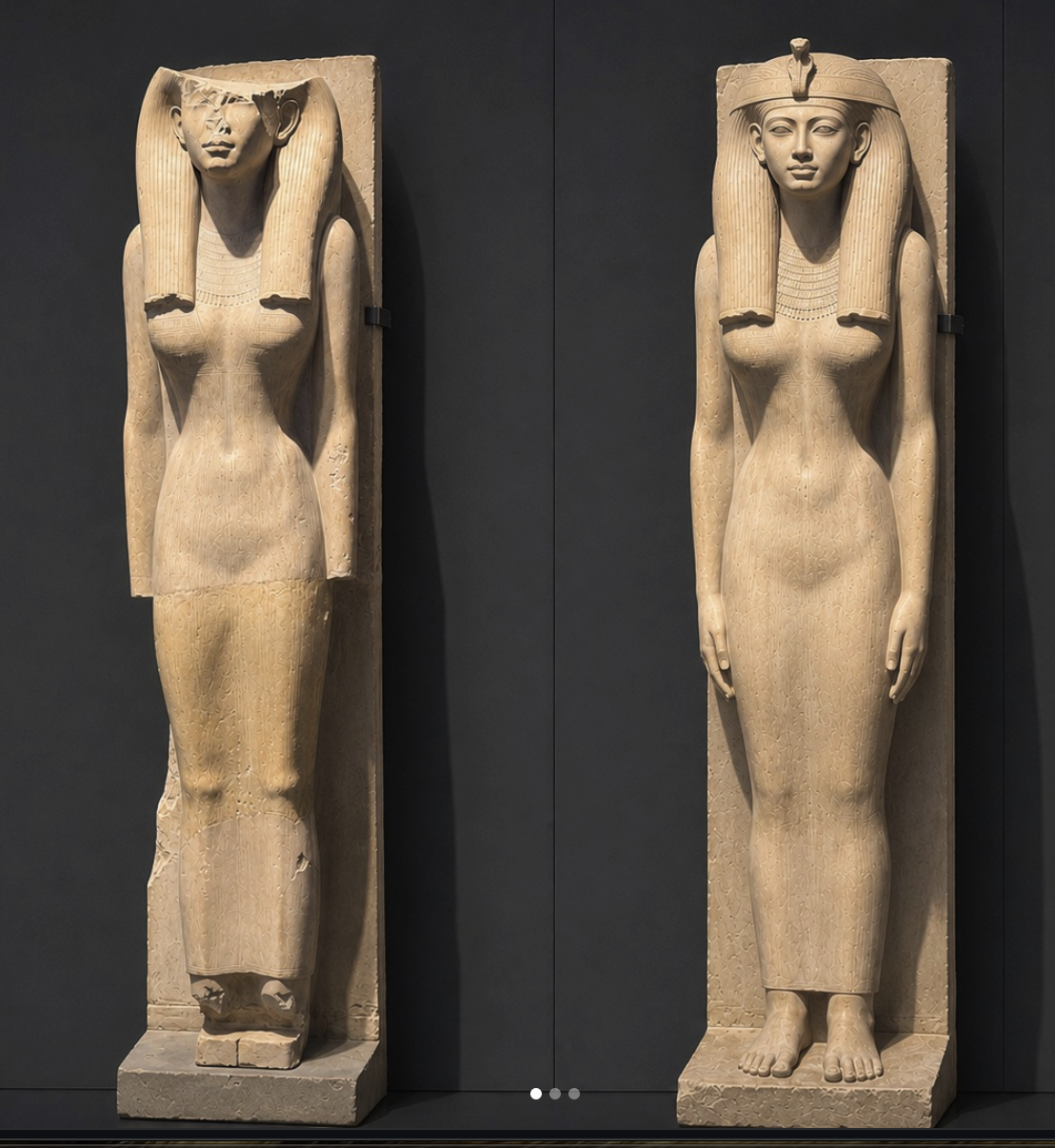
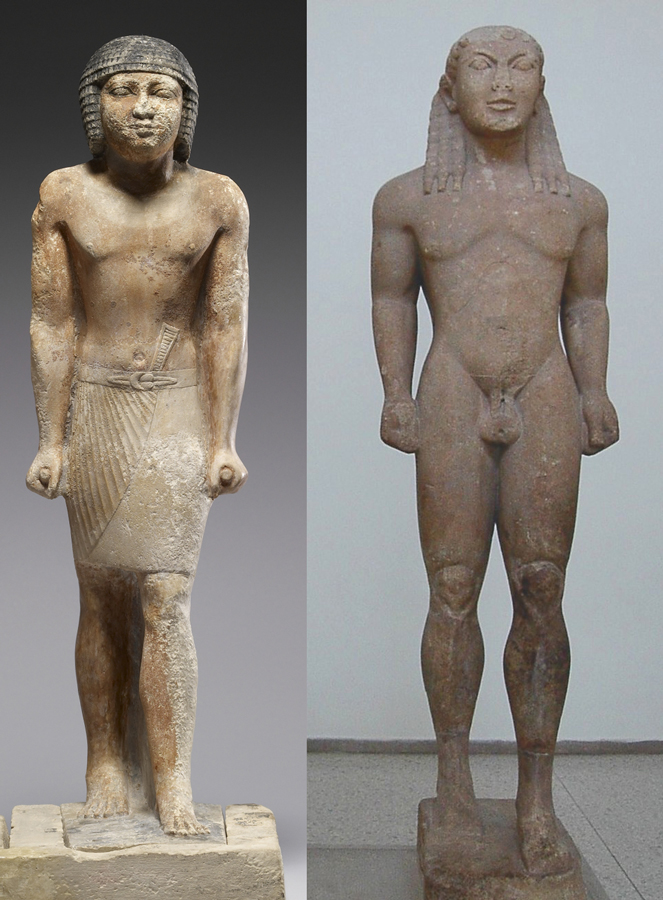
The ancient and established civilization of Egypt could not fail to fascinate up-and-coming Greece. Indeed, there is very good reason to think that Egypt strongly influenced Greek art, architecture, mathematics, philosophy, and magic.
Greeks such as the historian Herodotus traveled in Egypt and recorded for us both valuable, and sometimes confused, information. He often “translated” Egyptian Deities for his Greek audience. Writing in the fifth century BCE, he makes the Isis-Demeter equation simple. He says that Isis “is Demeter in the Greek tongue.”
But if he can say that so very casually in the fifth century, the two Goddesses must have been equated much earlier. The first recorded contacts between Greeks and Egyptians date to the late Bronze Age, so there was plenty of time for such cultural translations. The connection between Isis and Demeter, if not the full syncretization, must have gone way back.
Hundreds of years after Herodotus, Diodorus Siculus (1st century BCE), another historian writing about Egypt, says that “the same Goddess is called by some Isis, by others Demeter, by others Thesmophoros [an epithet of Demeter; meaning “law-bringer; I wonder whether there was a syncretism with Ma’et here], by others Selene, by others Hera, while still others apply all these names to Her.” He further notes that “Isis is more similar to Demeter than any other Goddess.”
It is easy to find harmonies between the two Great Goddesses: both search for a lost loved one; Isis for Osiris, and Demeter for Persephone. Both are Goddesses important to agriculture. Both are capable of taking away that which They bestow: in Demeter’s grief, nothing grows. In Isis’ mourning anger, She dries up a river, every Nile-dependent Egyptian’s nightmare.
Although it is older, and a bit dated, an article I’m reading suggests that some of these Divine harmonies may have originated in Egypt, possibly with Isis, and been an influence on Demeter’s myth in the early stages of its development. This is suggested on the basis that Isis’ Divine personality and myth were already well developed before Demeter came to prominence in Greece.
Some scholars think that Demeter’s roots may be in the indigenous Pelasgians of Greece or Minoan Crete. (People first inhabited Crete starting in the early Neolithic.) Even in the Classical Greek period, there were still some enclaves of Pelasgians surviving in mainland Greece and Crete. What the great scholar Carl Kerényi takes to be the first representation of the Demeter-Persephone myth comes from Phaistos in Crete around 2000 BCE (Early Minoan III period on Crete; Middle Kingdom in Egypt). Yet trade contacts between Egypt and Crete predate that representation by many hundreds of years.
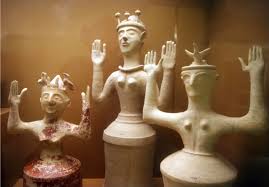
Such trade contacts go back to the Early Minoan II period, which would have been during the Old Kingdom in Egypt. By that time, the Isis myth of searching for a loved one, the Goddess’ resurrection of Osiris to His new life, and Isis’ birthing of Horus—as well as grain and agricultural connections for both Isis and Osiris—were well established in Egypt.
Much of Egypt’s trade with Crete came through the Egyptian delta, which borders on the Mediterranean Sea. The island of Crete is just 400 miles north. If it is true that the worship of Isis began in the delta, as scholars think, then the possibility of Isis’ influence on Demeter’s myth seems even more likely.
Some researchers have pointed to the similarity between some Egyptian and Cretan hieroglyphs, such as those for palace, bee, adze, tree, and more. They even had one that looks like an ankh. The emphasis on the sacred bovine is common to both cultures, and we find symbols such as miniature boats, sistra, and Egyptian-style stone cosmetic pallets among Minoan grave goods. The art styles of the cultures are similar, too, though the Minoan is generally more flowing than the Egyptian.
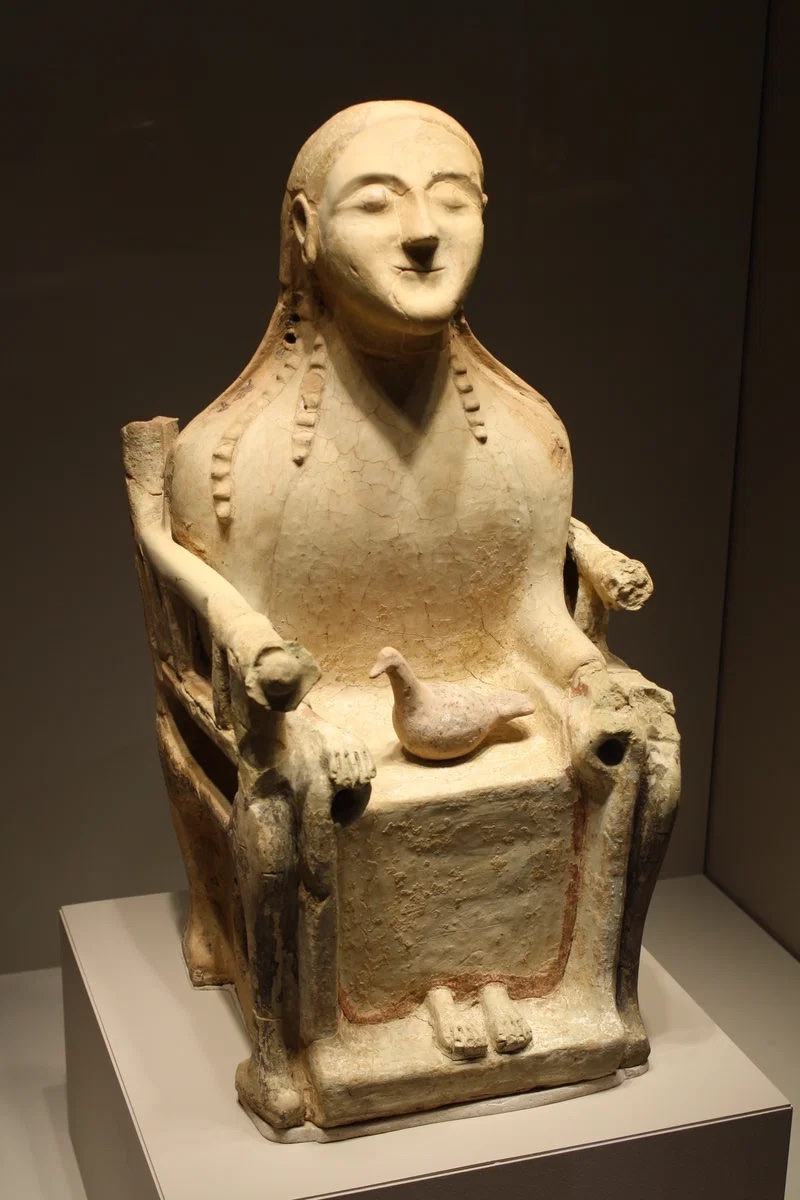
All that said, we have no firm proof of Isis’ specific influence on Demeter at this early date. Nevertheless, I find the possibility quite intriguing.
In later periods, as we have already seen from Herodotus and Diodorus Siculus, Isis and Demeter were firmly connected in both Greece and Egypt. Isis was sometimes assimilated with Demeter’s daughter, Persephone, too. Both Isis and Persephone have vital connections with the dead, the Mysteries, and either to greater or lesser degrees, with magic. Demeter Herself is a Lady of the Dead, for the dead are known as “Demeter’s people.” So, both Eleusinian Goddesses have chthonic and underworldy association, which fits very neatly with Isis’ position as Lady of the Otherworld, Lady of Resurrection, the Goddess Who has “life in Her mouth.” (As an aside: you may have heard about a “Tomb of Isis” at Eleusis. It is simply a human tomb that included an Isis figurine in the burial. So all we can say about this so-called “tomb of Isis” is that there may have been an Isis devotee who was buried at Eleusis.)
The identification of Isis with Demeter made the Great Goddess of Egypt accessible to the Greeks who came in large numbers to settle in Egypt, first at the trading town of Naucratis (in the delta), and then under the Macedonian Ptolemies. From there, the worship of Isis moved into the wider Greek culture, and into Rome. Eventually, Isis was received in cities and towns throughout the Mediterranean region, and throughout the Roman Empire.
In this process, Isis became identified with many, many other Goddesses, as She gained more of Her ten thousand names. Yet, the identification of Isis and Demeter remained fundamental. It is crystal clear in the Greek aretalogy of Isis from Maroneia, dating to approximately the second century BCE, in which an Eleusinian myth of Demeter is attributed to Isis:
You are pleased with Egypt as your dwelling-place; among the Greek cities you most honor Athens. It is there that for the first time you made known the fruits of the earth. Triptolemos, having subdued your sacred serpents, carried by a chariot, distributed the seed to all Greeks.
Aretalogy of Maroneia, Greece
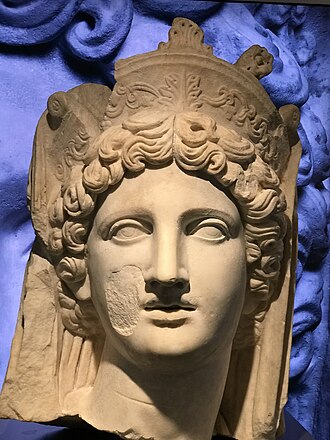
If the Goddesses were similar, then so were Their rites. Three ancient writers in particular—Herodotus, Hecateus of Abdera, and Diodorus Siculous—preserved the claims of the Egyptians that the famous Eleusinian Mysteries of Demeter and Persephone were actually Egyptian in origin, and that the priestly families who officiated at the Mysteries were of Egyptian stock. Diodorus records the tradition that the Eleusinian Hierophantic family of the Eumolpidai was Egyptian because they are “the only Greeks who swear by Isis.” Herodotus tells us that Demeter’s important fertility festival of the Thesmophoria was brought to Greece from Egypt by the daughters of Danaus, while Diodorus says that the rite of Osiris is the same as that of Dionysos and that of Isis very similar to that of Demeter, the names alone having been interchanged.
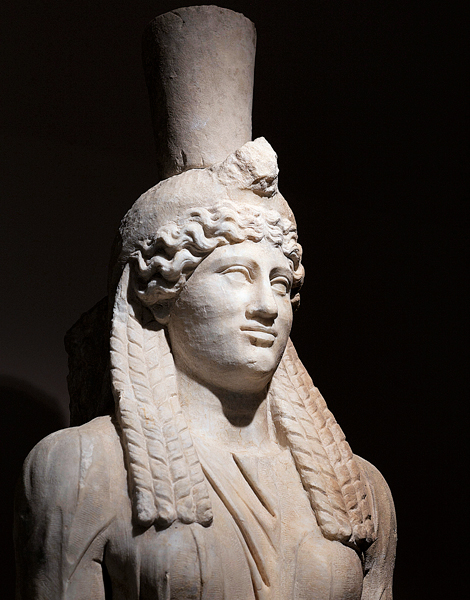
A village to the east of Alexandria, Egypt was specifically named after the Greek Eleusis. The writer Satyrus in his book On the Demes of Alexandria says that a yearly festival was enacted there, which included a variety of contests such as those that frequently accompanied Greek festivals. He does not, however, mention Mysteries such as the ones that took place at the Greek Eleusis. Evidence from several writers of the Imperial period indicate that there were probably no Eleusinian-type Mysteries conducted at the Egyptian Eleusis, but it is likely that an important festival of Demeter was celebrated.
I’ll refer you back here for some interesting sharings and borrowings between the two Goddesses, as told in Their myths, so that I don’t repeat myself.
On the other hand, we also find Demeter represented alongside Isis, Serapis, and Hapokrates on lamps and coins from Egypt. And so, She also maintained Her own separate identity as well—just as do the Egyptian Deities Who can combine with each other, while still remaining separate and true to Themselves.
So what do we do with this information? Maybe nothing. But maybe, if you are ever in a Greco-Egyptian mood, as I am sometimes, you may wish to make a first-fruits offering to Isis-Demeter. Perhaps you will want to explore Her Mysteries: a search for a Beloved One, pain and joy, and the Mysterious birth of a Divine Child.
When you reach out, Who will take your hand? Isis-Demeter? Demeter-Isis? Isis? Demeter? Whoever She will be, She will be a Great Goddess in Whose arms many have found welcome for thousands and thousands of years. And so can we.

